
Living Root Bridge · Meghalaya
Double Decker Living Root Bridge, Nongriat
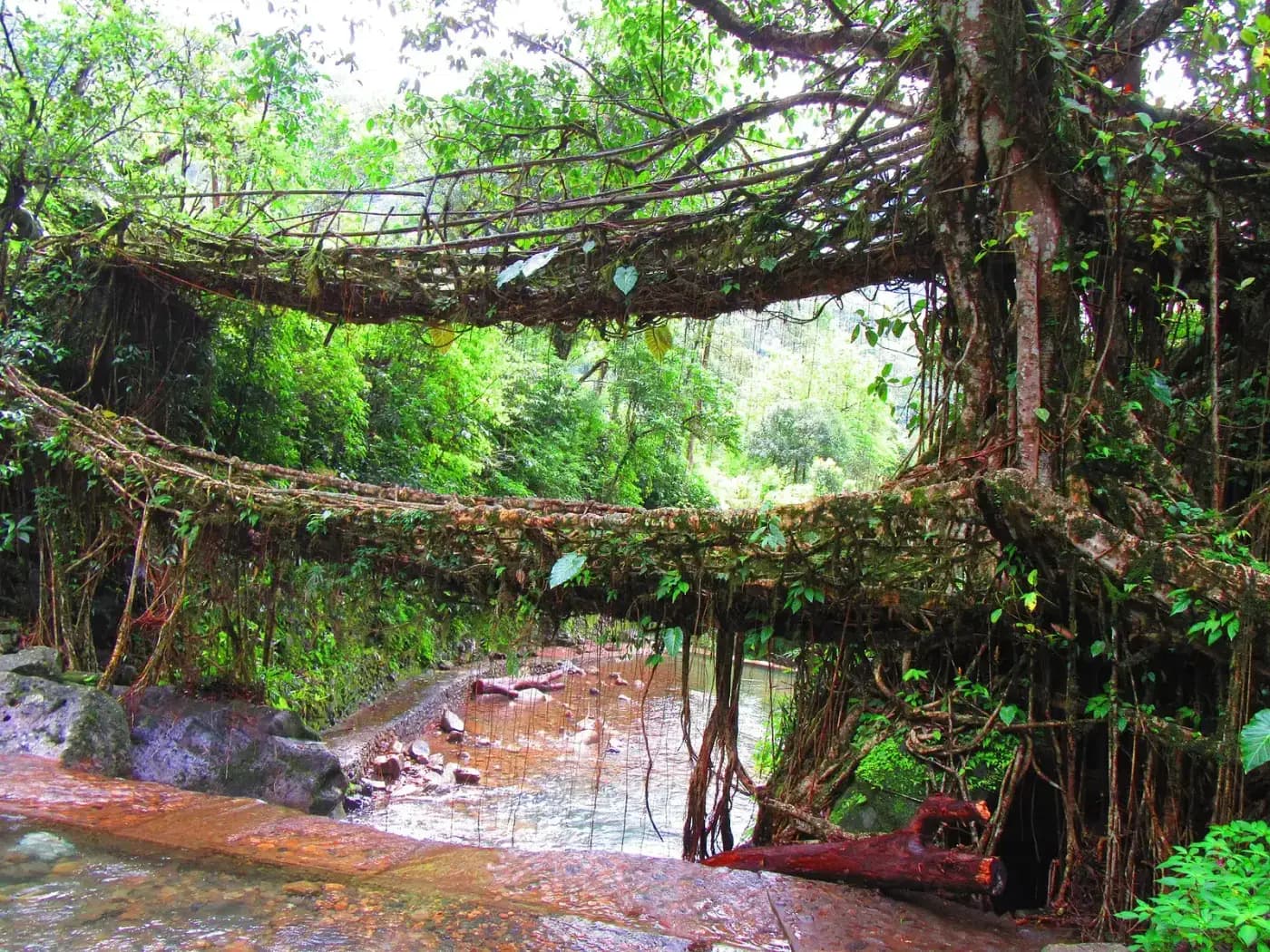
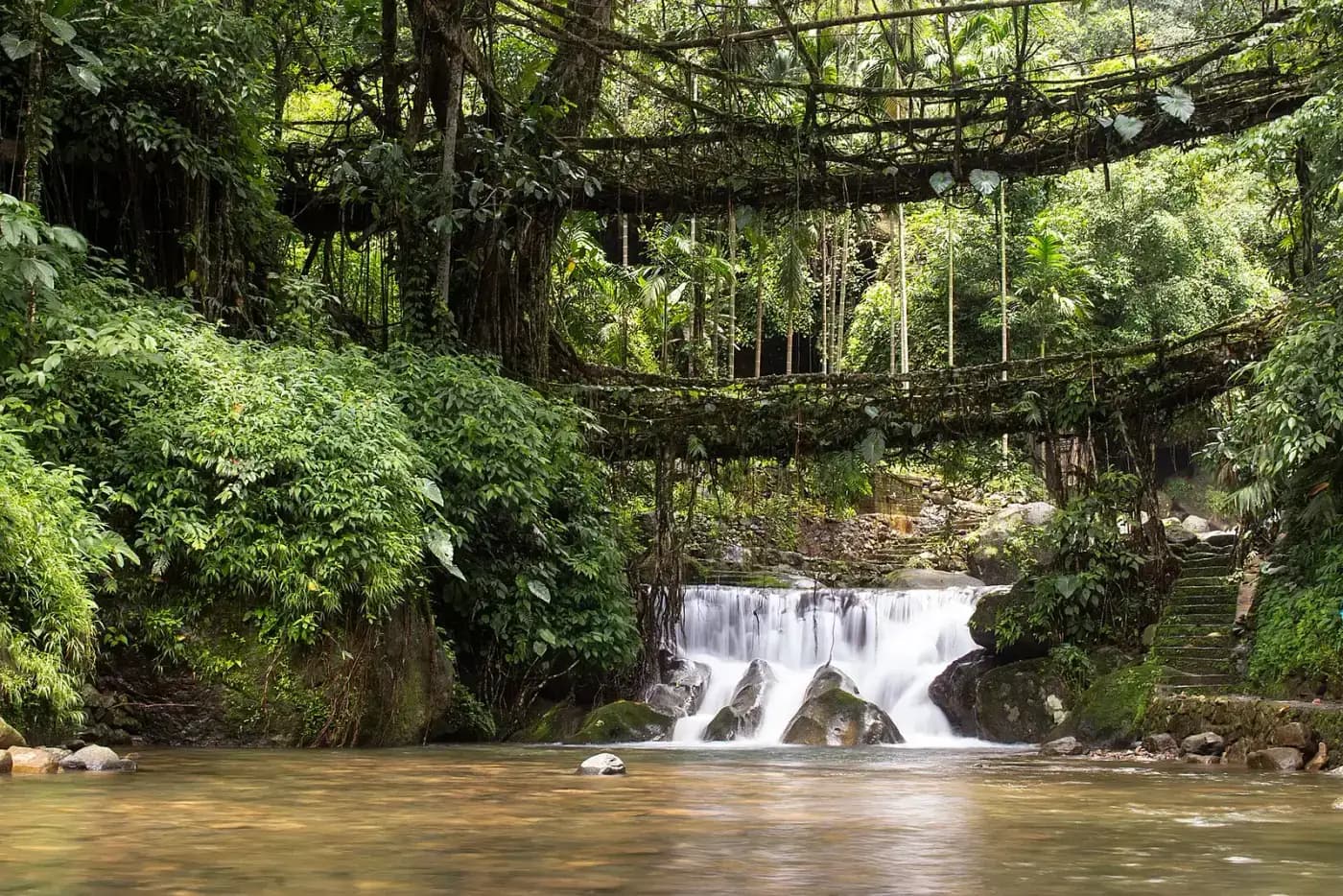
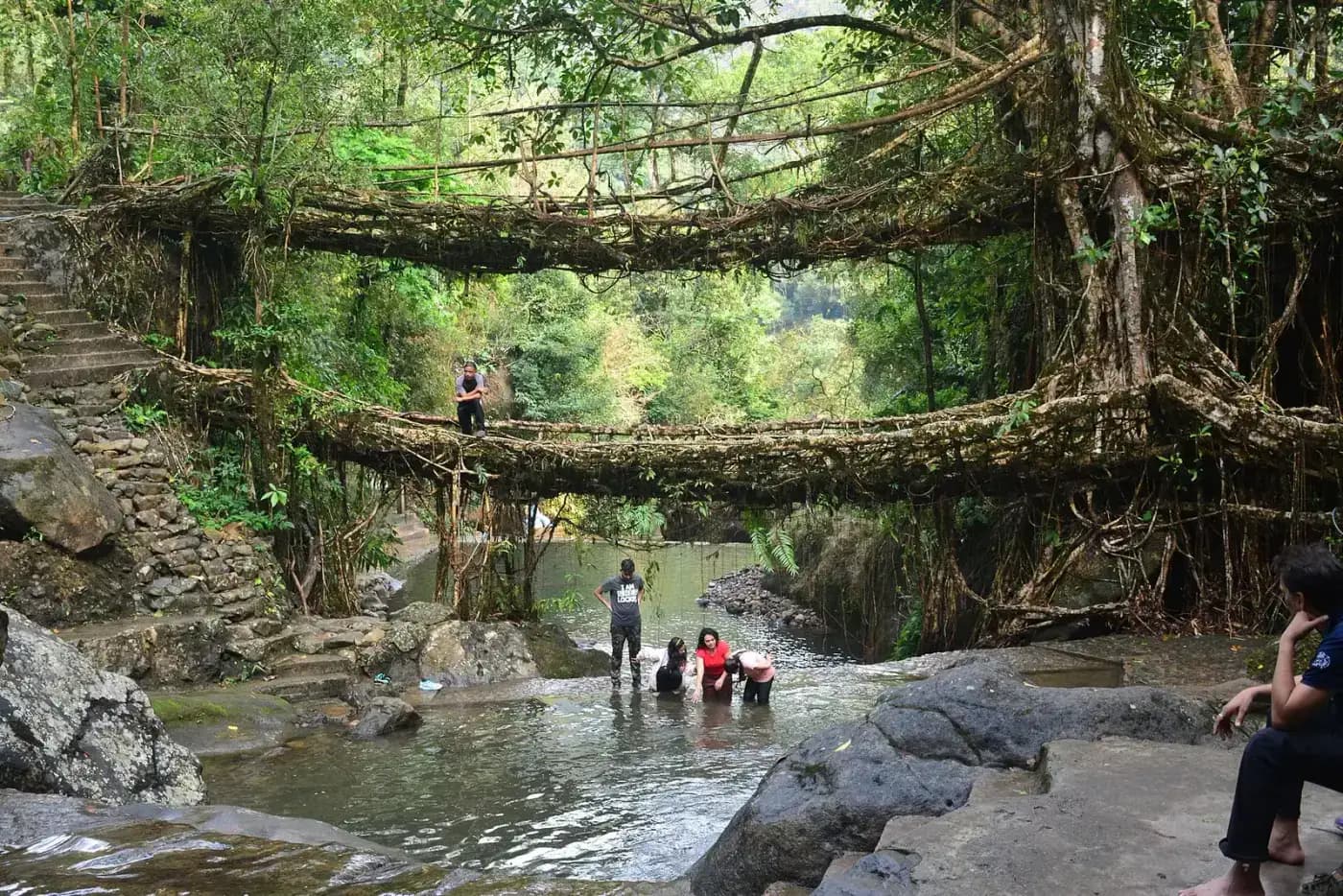
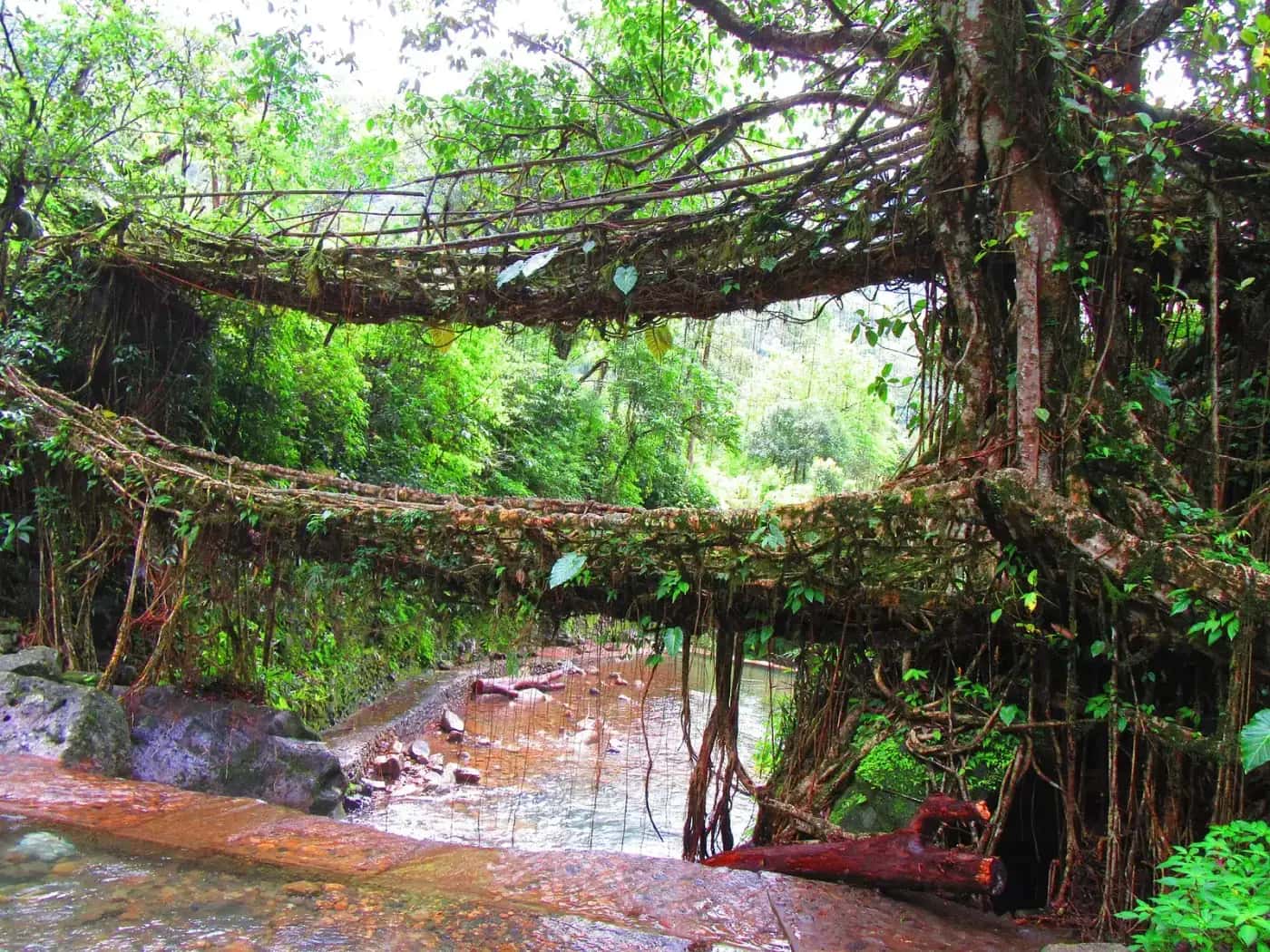
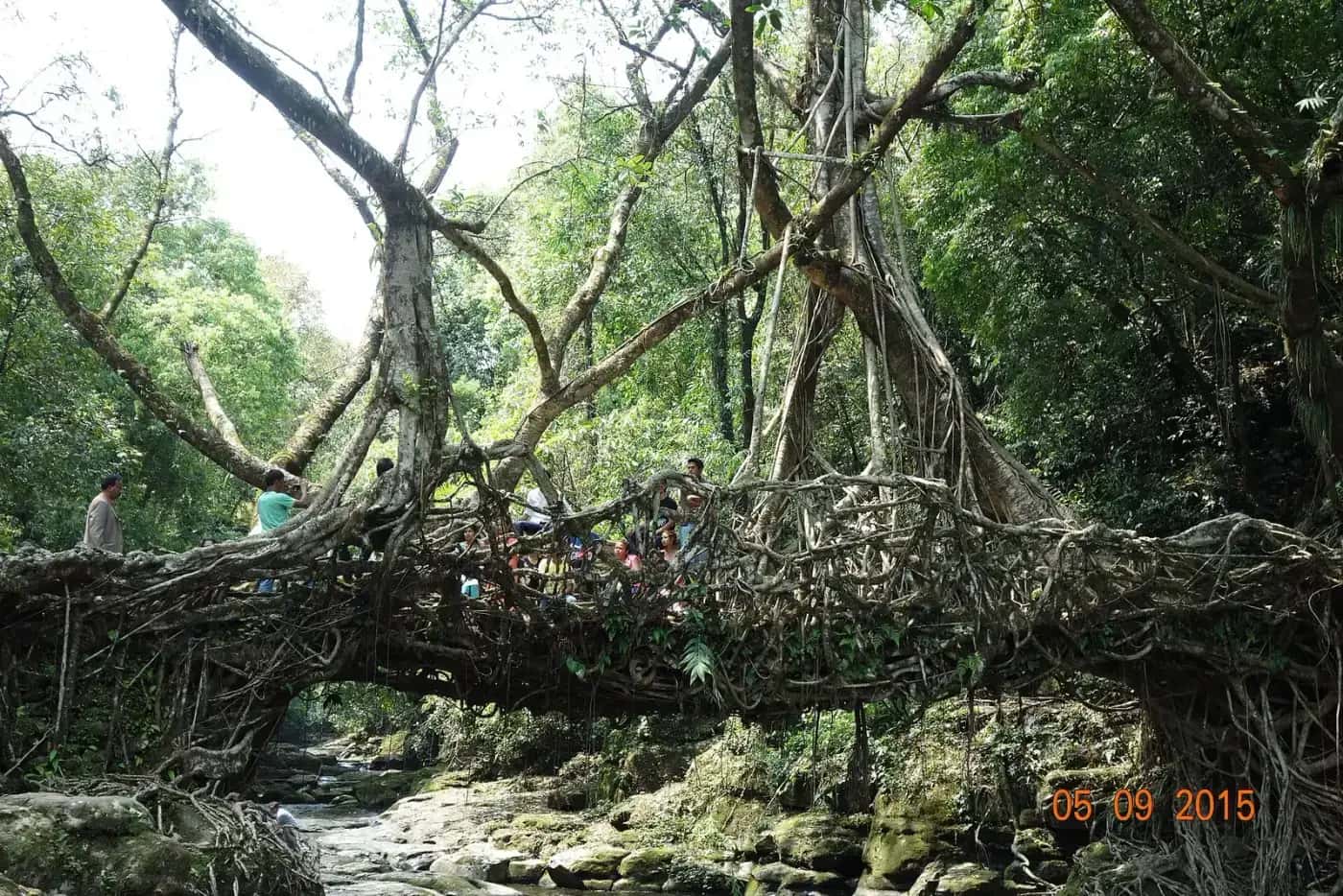
A rare two-tier bridge grown from rubber fig roots, reached by about 3,500 steps from Tyrna.
Quick facts
- Best season
- October – April (dry steps); monsoon trekking is slippery
- Duration
- 5–7 hours round trip or overnight at Nongriat
- Altitude
- ≈550 m (Nongriat); ≈1,300 m (Tyrna)
- Nearest town
- Tyrna / Sohra (East Khasi Hills)
- Permit
- No permit needed for Indian or foreign visitors. Carry photo ID; small village entry/parking fees are common.
- Timings & fees
- Small community fee at the bridge; homestays in Nongriat.
About Double Decker Living Root Bridge, Nongriat
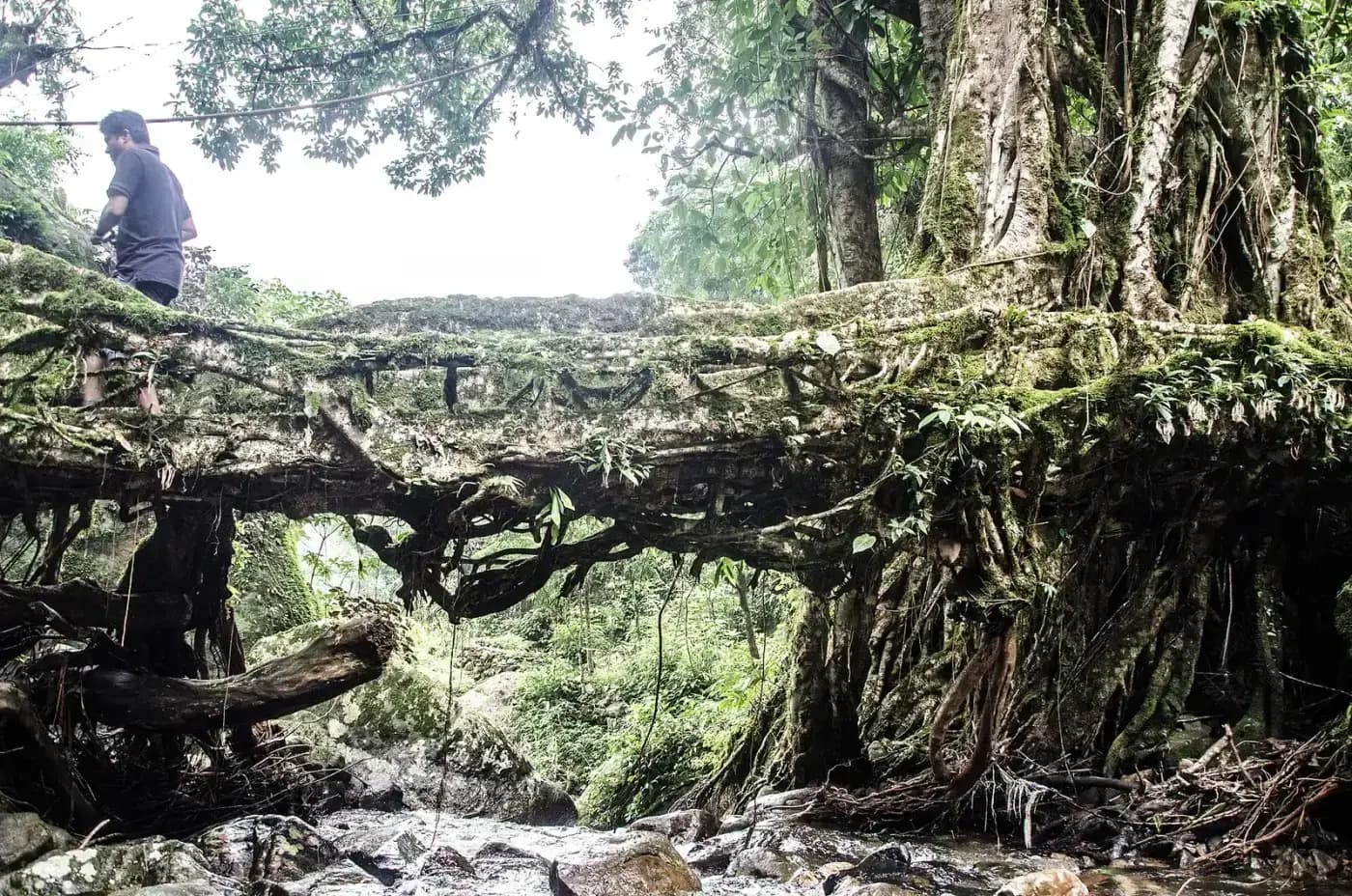
The Double Decker Living Root Bridge at Nongriat is Meghalaya's most iconic sight and one of the great walks of Northeast India. Over generations, Khasi villagers trained the aerial roots of the Indian rubber fig (Ficus elastica) across a stream, weaving and tying them until they rooted on the far bank and thickened into a living structure. Here, two bridges were grown one above the other, creating a unique double-decker form that grows stronger with age.
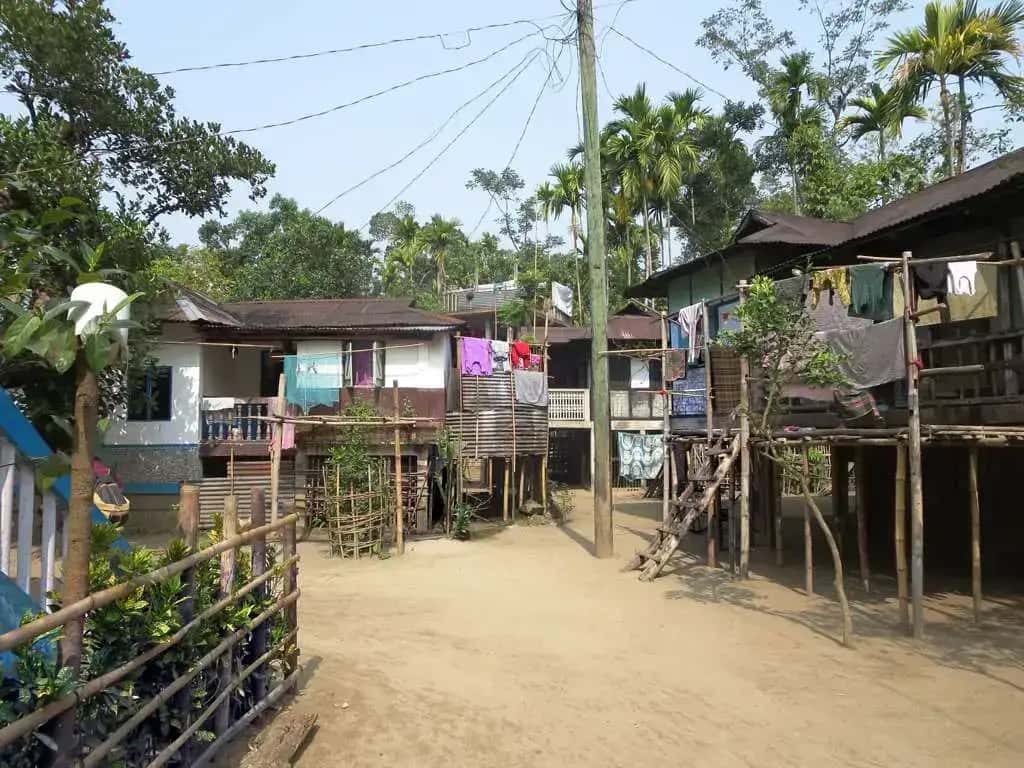
Reaching it is part of the experience. From the village of Tyrna, about 10 km from Sohra, a stone stairway descends roughly 3,500 steps and about 750 m in altitude through forest and betel-nut groves, crossing two long steel suspension bridges over turquoise rivers along the way. Many visitors stay overnight in simple homestays at Nongriat, which gives time to walk on to Rainbow Falls and its natural pools.
Living root bridges across the Khasi and Jaintia hills have been placed on UNESCO's tentative World Heritage list, and communities charge a small fee that helps maintain them. Please keep to the path and avoid climbing on the roots.
How to reach Double Decker Living Root Bridge, Nongriat
Drive to Tyrna village (about 10 km from Sohra, 65 km from Shillong) and trek down. Guides are available locally.
Tours that include Double Decker Living Root Bridge, Nongriat

Things to do
Places near Double Decker Living Root Bridge, Nongriat
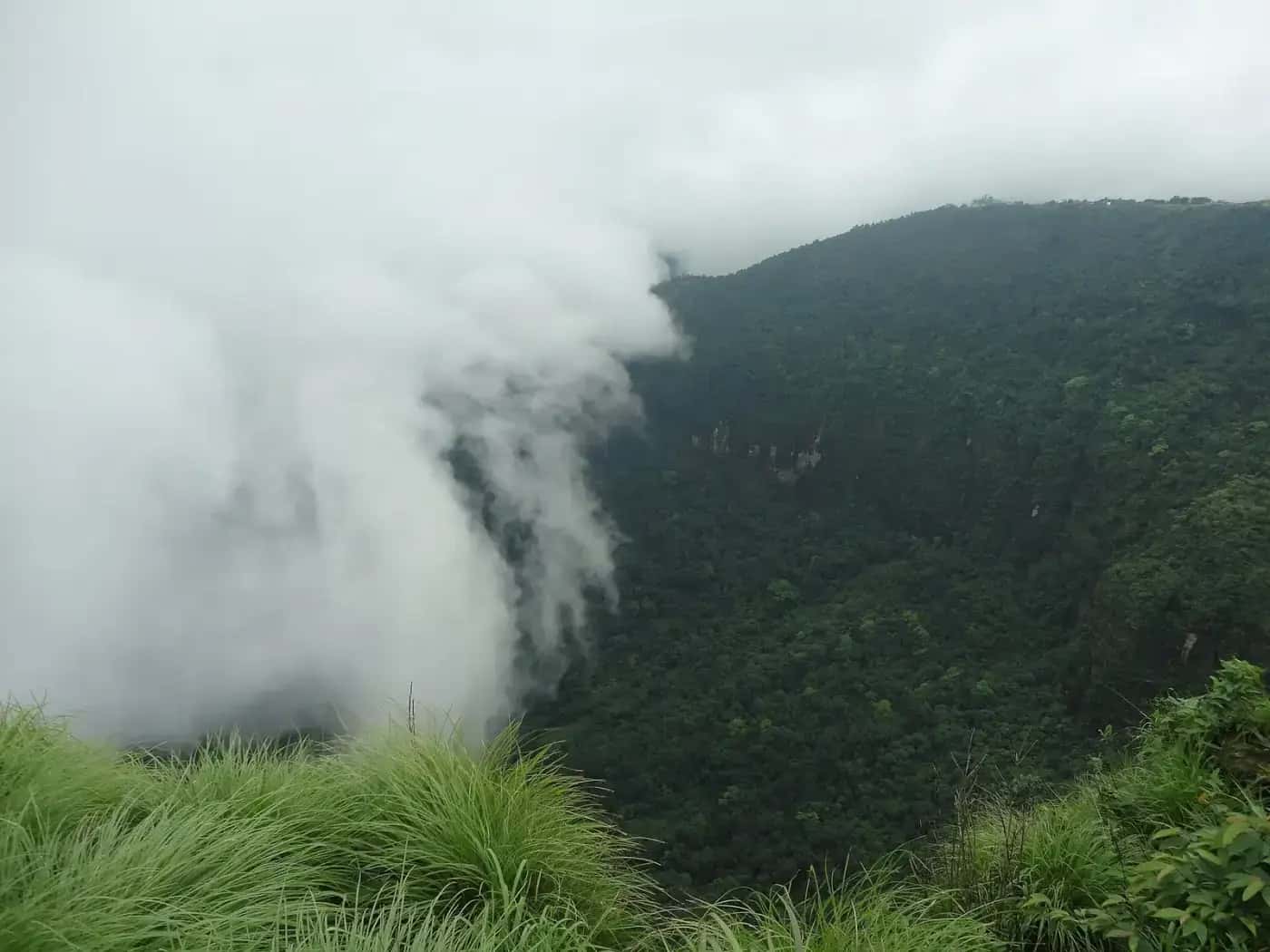 Plateau TownSohraLegendary rain capital on the edge of the Khasi plateau, ringed by gorges, waterfalls and caves.
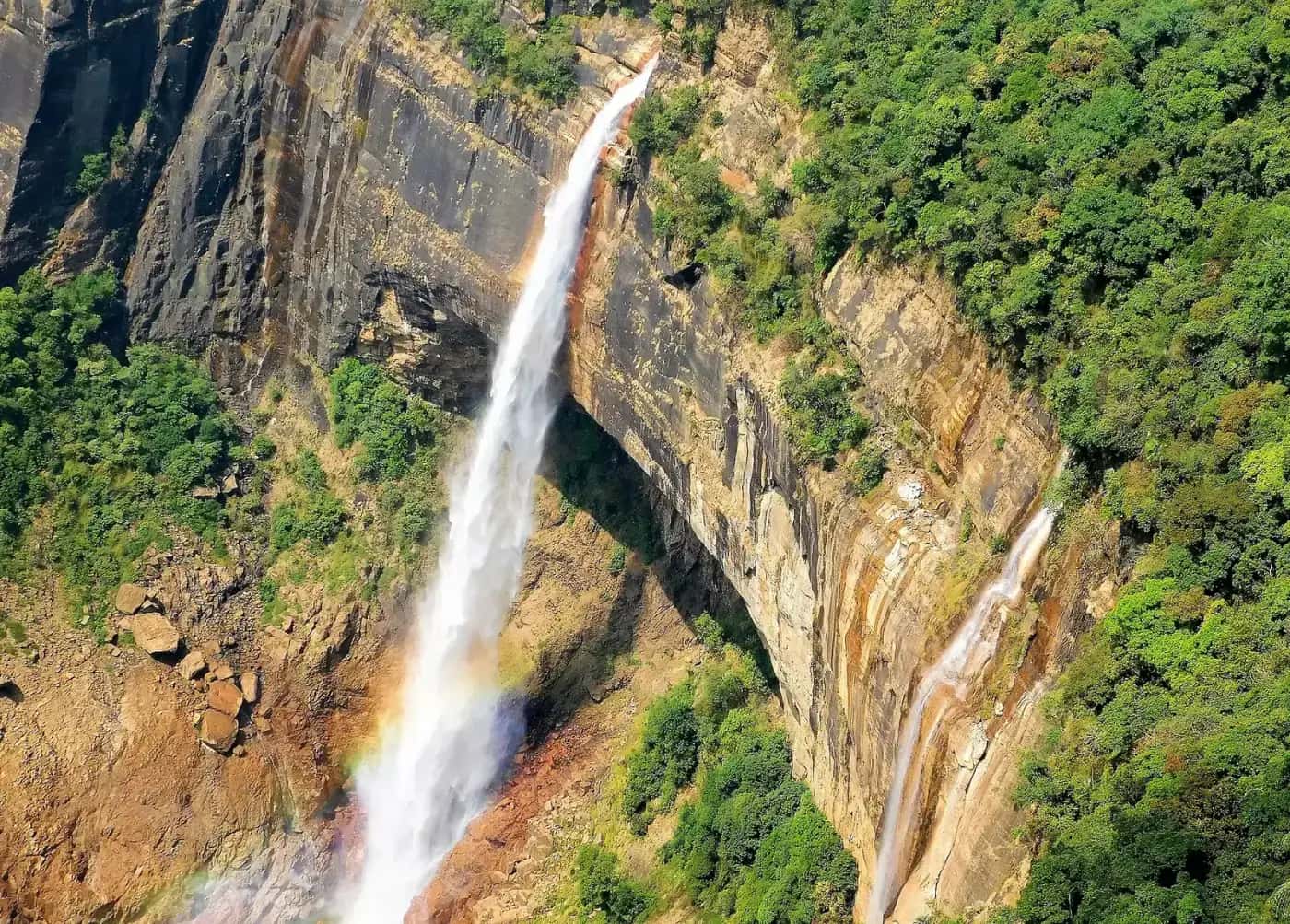 WaterfallNohkalikai FallsIndia's tallest plunge waterfall, dropping about 340 m into a turquoise pool near Sohra.
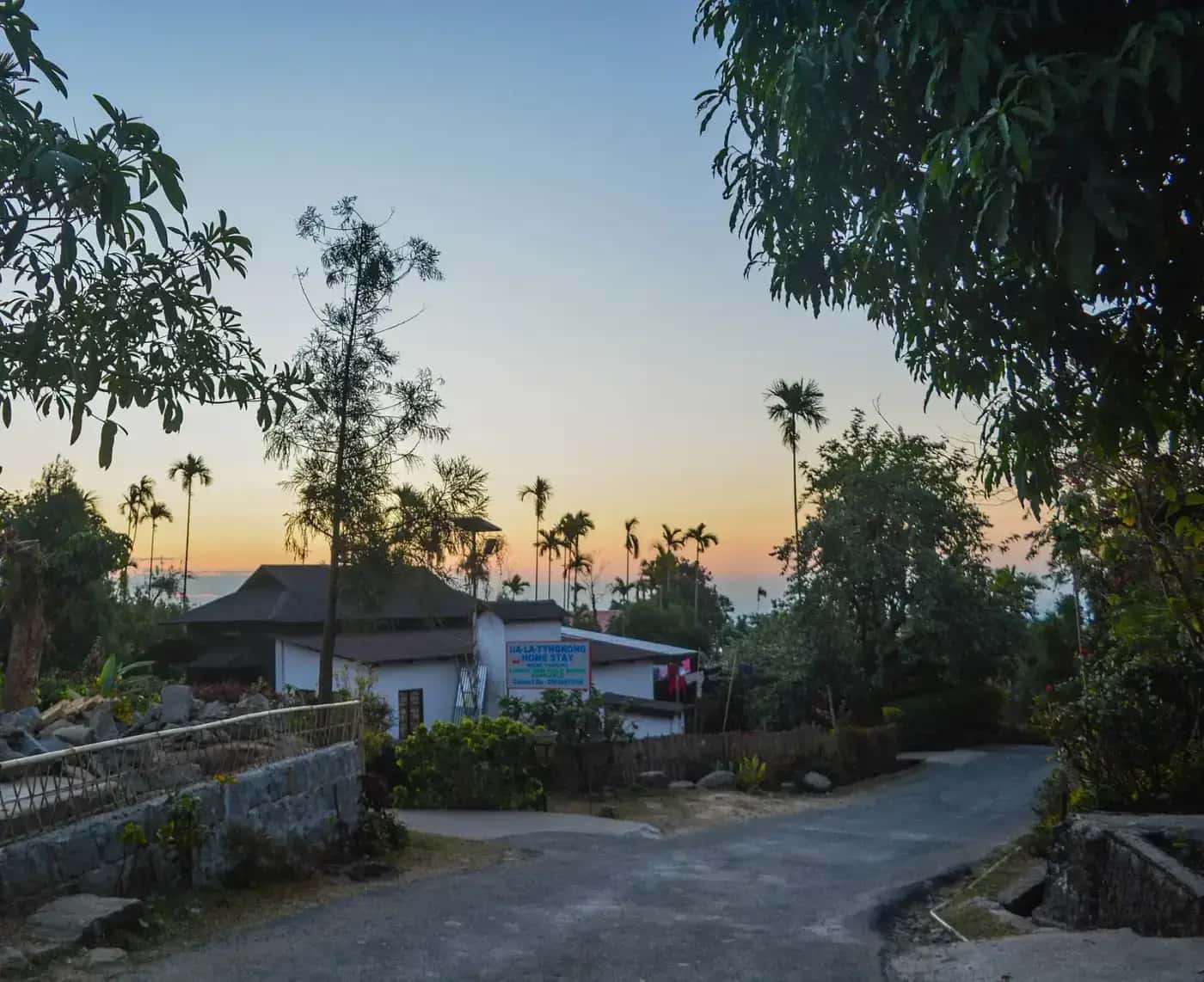 VillageMawlynnongFamously clean Khasi village near the Bangladesh border, with a root bridge and bamboo sky-view.
Double Decker Living Root Bridge, Nongriat FAQs
How many steps are there to the double decker root bridge?
About 3,500 stone steps each way from Tyrna, with a descent of roughly 750 m.
How long does the Nongriat trek take?
About 2–3 hours down and 2.5–3.5 hours back up, plus time at the bridge. Many people stay overnight.
Can children and older travellers do the trek?
Fit children and active older travellers can manage it slowly. The climb back up is the hardest part.
What else can I see from Nongriat?
Rainbow Falls, about 1–1.5 hours further, and natural blue pools near the bridge.
Facts checked against: en.wikipedia.org · meghalayatourism.in. Conditions change — verify timings and permits before travel.